Plan Research with the UX Research Canvas
Learn how to get buy-in for user research and start planning UX Research with this template

While UX design is becoming understood by mainstream companies, UX research is still largely misunderstood. How do you convince your colleagues that designers can and should be doing research? We think UX research projects are the most successful when collaborative, goal-focused, and specific.
One of the ways that we teach our students to get buy-in for research is to plan the project collaboratively with stakeholders. If you sneak research into your design projects, you won't be able to point to the results as coming from research.
The design outputs of sketches, wireframes, and polished visuals improve with design inputs like research. If companies don't understand that research is required, designers will have to make time in projects for research on their own, leaving them overworked and misunderstood.
Get your team on board with research beforehand, making understanding the research findings and the designs they become easier.
How to Use the Canvas
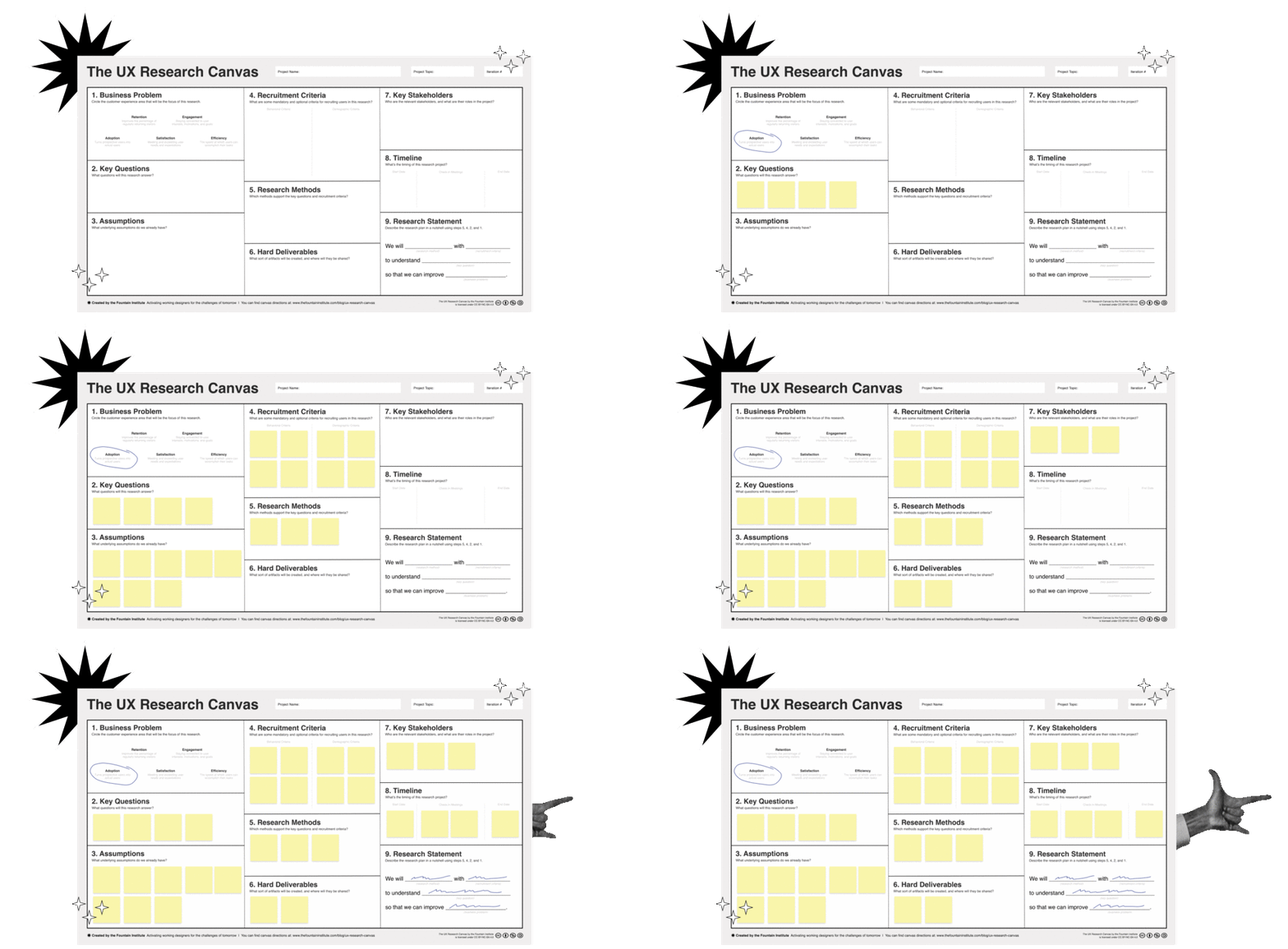
We designed this canvas for digital whiteboard tools like Miro, Mural, and Figjam. Drag the PDF into the whiteboard tool and iterate away! You can also print the canvas, but we recommend writing directly or using small Post-its. If you're working in a two-sided marketplace with multiple user types, use a different colored Post-it to represent each customer type.
Start the canvas at step 1 and work your way to step 9. The prompts beneath the numbered header will guide your research plan toward a specific goal. We recommend that you fill out the canvas together with primary stakeholders. The canvas cells are small, forcing you to edit to fit the space. If you run out of space in a section, try dot-voting with stakeholders until the post-its fit.
We hope you check in with your canvas periodically throughout your research to ensure your project stays on track. Too many research projects start with no defined goal and lose focus as the designer goes through "research wormholes."
We divided the UX Research Canvas into three sections to make it easy to understand: Get focused, get specific, and get buy-in.
Get Focused
1. Business Outcome
What customer experience area will be the focus of this research?
UX Research should focus on user and business outcomes to be successful. Five of the most significant ways UX research can improve the business are adoption, retention, satisfaction, engagement, and efficiency. By forcing yourself to focus on a business problem upfront, your research will become more business-focused which help improve buy-in. Try to limit yourself to one problem and only use the "other" option if you have a particular business problem.
2. Key Questions
What questions will this research answer?
Questions spark research, but many companies obscure the questions with jargon and plans. It's difficult for people in authority to admit when they don't know the answer to something. The challenge of goal-focused research will uncover the more profound unknowns and use only those questions as a starting point. Luckily, with a canvas, you can only fit five, so be strategic.
3. Assumptions
What underlying assumptions do we already have?
As you wrote down questions in the previous section, you probably noticed assumptions. It's a good idea for every project to keep an assumptions list, and UX research is no exception. These assumptions might be well informed. Be sure to mention any prior research that forms the basis for these assumptions.
Get Specific
4. Recruitment Criteria
What are some criteria for recruiting users in this research?
Stakeholders will probably have strong opinions on who you should talk to during research and why. This section prompts you to create a sort of mini persona to focus your research participant criteria. We chose the framework of behavioral vs. demographic characteristics to drive you to be specific with your search for users. You don't have to fill the entire section with post-its, but you should have a clear mental image of your ideal research candidate after completing this section.
5. Research Methods
Which methods will provide data on the key questions and assumptions?
Too often, methods dominate the planning of UX research. If you're doing in-house research, choose a method that aligns with your business problems and questions. If you're working for external clients, provide a small menu of methods that you're comfortable using and be prepared to explain how each might align the project towards the business goal and key questions.
Common research methods include:
In-depth interviews
Surveys
Diary studies
Ethnographic field study
Quantitative analysis
Desk research
Try these articles from Nielsen Norman Group or UX Professionals Association for helpful frameworks to pick a research method.
6. Hard Deliverables
How will the research be visualized and presented?
Most companies probably won't be familiar with the hard deliverables of UX research. To build trust in your research skills, provide a menu of hard deliverables and let stakeholders choose.
Common deliverables of research:
Frameworks
Models
Condensed insights
Scoping documents
Evaluations
Presentations
Reports
Outline the deliverable upfront, and it will ease the minds of your stakeholders. It will also help you to focus your approach as you work through the canvas.
Get Buy-In
7. Key Stakeholders
Who are the relevant stakeholders, and what are their roles in the project?
Stakeholders are people without whom a project would be a failure. Stakeholders include fellow collaborators and anyone that will be providing feedback or oversight. Don't overthink these, but beware of the tendency to add everyone involved to your canvas. List only stakeholders that have a clear role in the planned project.
8. Timeline
What's the timing of this research project?
You might be surprised how many research projects don't have an end date or milestones. Even if you're working in sprints, stating these dates upfront will force your research to stay focused. We recommend scheduling these meetings as soon as you agree on the dates.
9. Research Statement
What is the research plan in a nutshell?
Some stakeholders won't have time to review your research plan. The Research Statement provides a concise summary of the project. Screenshot this section of the canvas and use it as a thumbnail for project documents. We recommend that you use this statement in casual conversation when your project comes up.
Congratulations, your UX research plan is ready to go! Export that canvas and get people on board with UX research.