5 Key Elements to Designing Workshops
Learning how to build workshops can be a powerful tool for your life.
Designing workshops can teach you how to utilize the collective knowledge of a group to create ideas you could never come up with on your own. Knowing you can harness a group's incredible creativity to solve challenging problems can give you leadership skills and confidence.
But it can be scary at first. You didn't know where to start or end. What if you look unprepared or waste people’s time? Workshops can be a very expensive waste of time (and ultimately money) if they go wrong.
How to design workshops
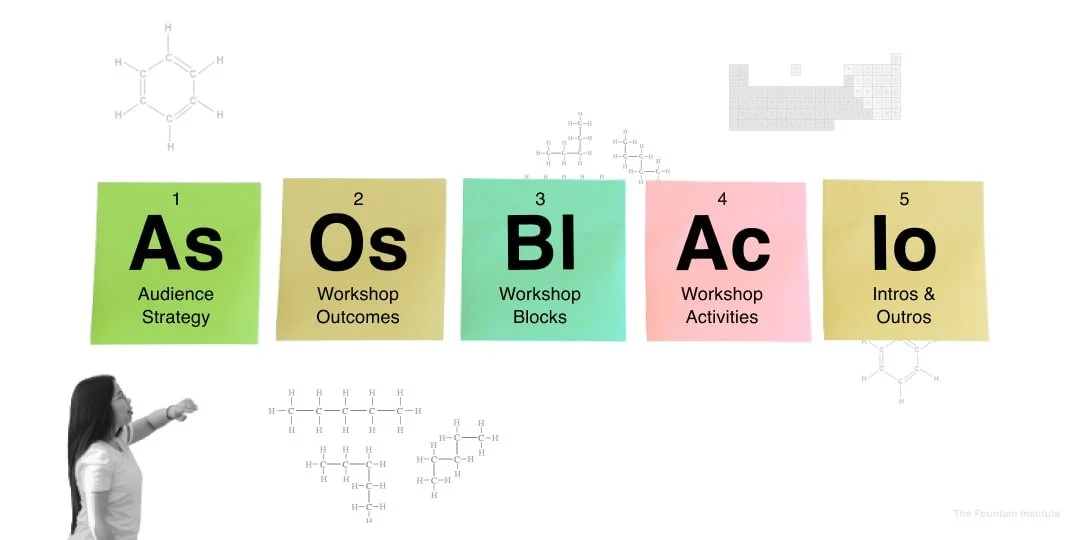
Over the past 15 years, I have honed in on five key elements I use in every workshop I build. These elements will ensure that your workshop is well-planned and tailored to your audience.
1. Audience Strategy
The first thing you need to know when building a workshop is who it is for. Designers are used to being human-centered when creating products. Why should it be any different when creating workshops?
You can apply your human-centered lens by thinking of your audience as your user. Anybody that is in the meeting or workshop is your user while the workshop is happening.
Some things to you should consider when creating an Audience Strategy:
Role - What’s their job title or user type?
Experience level - How well do they know the topics covered?
Value - What value will this workshop bring to your audience?
Expectations- Why are they bothering to show up?
Concerns- What concerns might they have about the workshop?
Addressing Concerns - How might you address their concerns?
To make sure that you think through all these things, I recommend you fill out an Audience Strategy Worksheet. The worksheet has all the prompts to ensure you focus on your audience before you get too far in the planning.
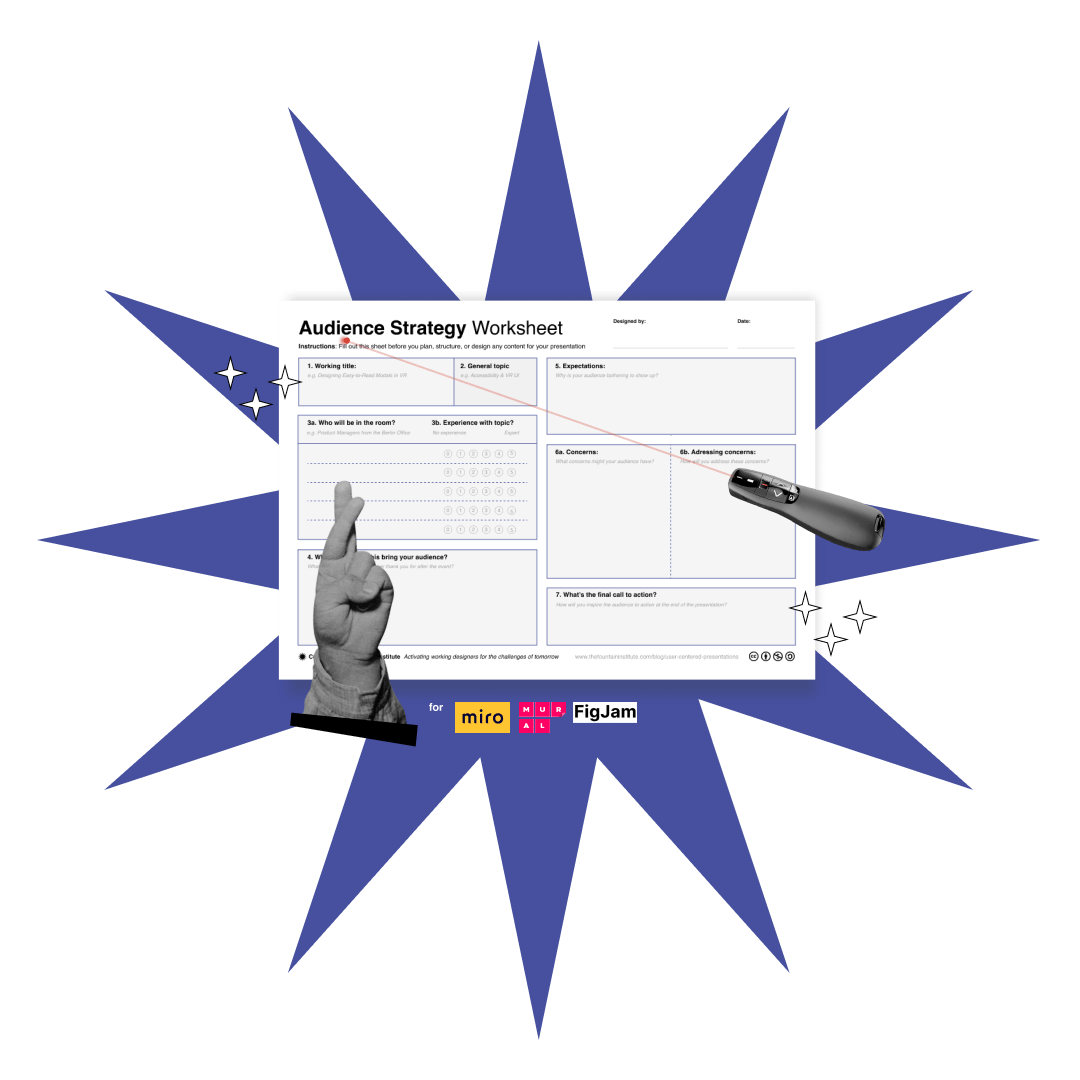
Audience Strategy Worksheet
Build your Audience Strategy first and design human-centered events.
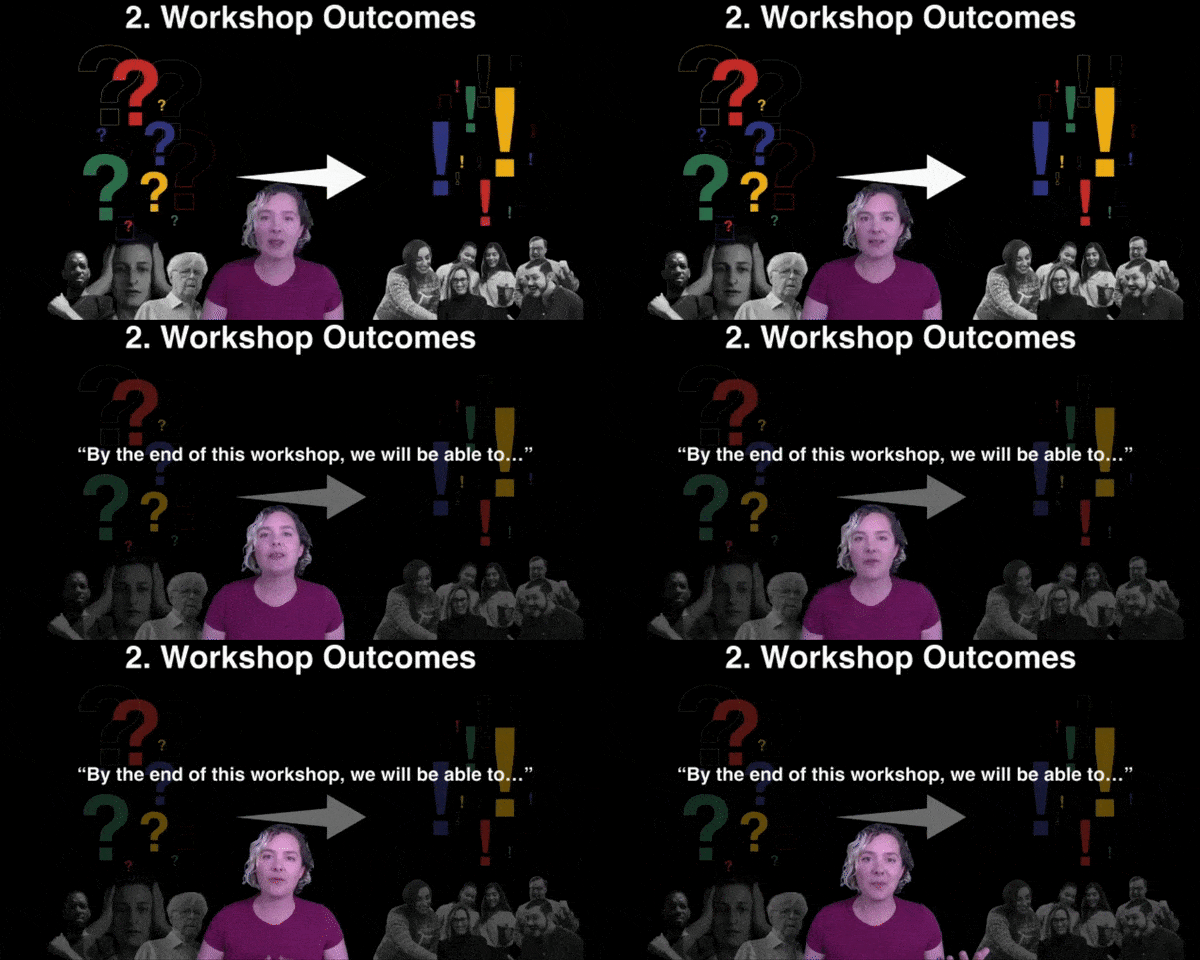
2. Workshop Outcomes
What will the workshop do the for the audience, and what will they achieve by the end of the workshop?
A workshop outcome describes what the audience will get from the workshop. It has the format, “By the end of this workshop, we will be able to __________.”
Are you trying to synthesize research findings with your group or brainstorming solution ideas? Without knowing the workshop's outcome, you will have no idea what to do inside it.
Advanced tip: you can have specific outcomes for the different blocks of your workshop. What's a workshop block? Read #3…
3. Workshop Blocks
Planning a 4-hour workshop (the longest I suggest for an online workshop) can seem daunting.
When planning, you might feel like a writer staring at a blank page. Blocking the workshop into chunks helps you break the planning into manageable blocks.
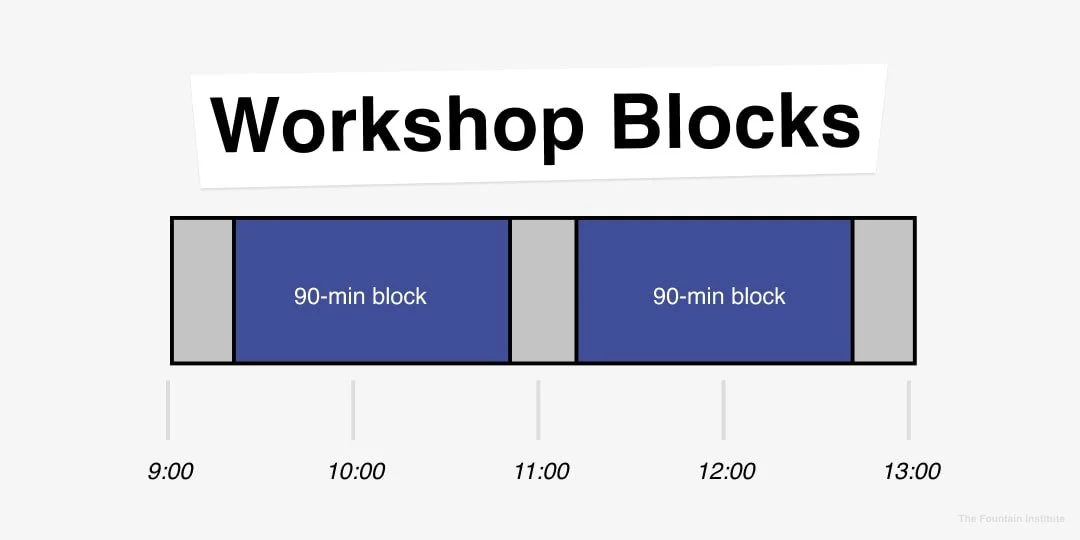
But if we can break down those four hours into smaller chunks, including a warm-up, break, and wrap-up, we are left with two 90-minute sections to plan. That’s already more manageable and less scary.
Advanced tip: Start the blocking process with the breaks. That will ensure you make time for the all-important intros, rests, and outros. And once the breaks are in place, you’re left with more manageable chunks.
4. Workshop Activities
We have our workshop broken down into blocks and a specific outcome for each block. What activities do we choose? Random activity from the design sprint? No! Don't select activities just because you have seen them or want to try them.
You need to pick an activity that fits your audience's desired outcome and level of experience—my top 10 activity archetypes.
Introducing
Creating and iterating
Prioritizing
Taking temperature
Pattern finding
Generating
Aligning
Researching
Engaging and informing
Testing
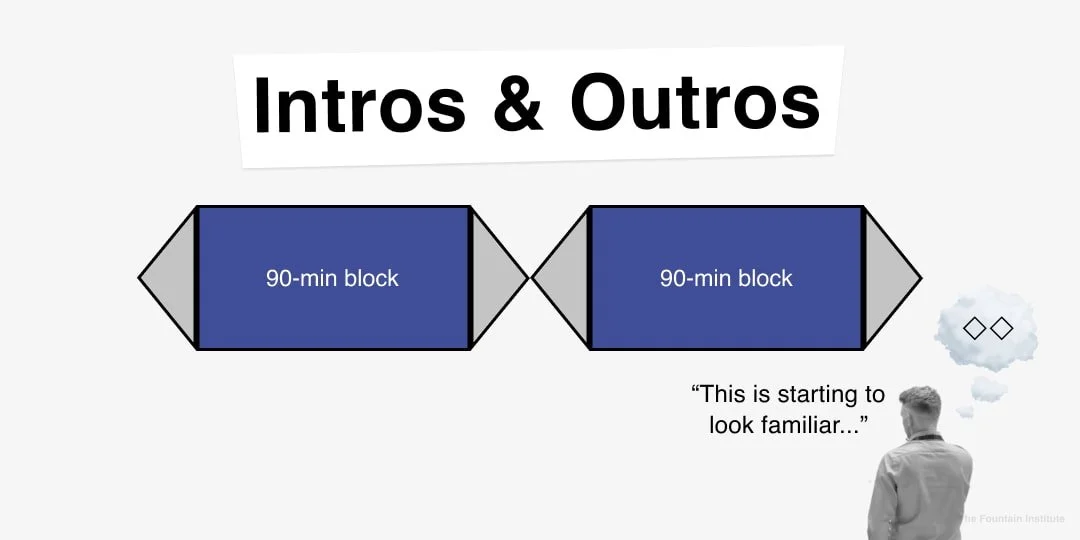
5. Intros & Outros
Ok, you're almost there. You've picked activities that match your outcomes and audience. The last thing to think about is how you will open up the workshop, what information your audience needs to know to get started, and how you will get them excited about what will happen.
Divergent thinking to introduce
Divergent thinking is a mindset that puts your audience in an open state to explore new possibilities, often a warm-up or icebreaker in a design workshop.
Here are some ways you can get your audience in a divergent state:
Give them a prompt to plan for a future discussion
Get them excited for the next activity with a warm-up or icebreaker
Prompt them to give a creative response to a related question
Inspire them with a new line of thinking to intro the topic
Convergent thinking to outro
Also, just as important, how will you wrap up the session, and move towards decisions, actions, and next steps? The goal is to converge ideas to reduce the options and decide the next steps.
Convergent thinking narrows down the thinking to a specific point or ending, often a solution in a design workshop.
Here are some ways to get your audience in a divergent state:
Remind them of rules or time constraints
Force them to narrow down the list of options with a dot vote
Have them rank the options available to spur a discussion
Timebox the activity with an ultimatum to move on after time expires
You might recognize the Double Diamond in these intros and outros. The idea of diverging and converging is a powerful idea that designers can harness to optimize their workshop experience.
Learn More
I hope you feel empowered to tackle your next workshop with these five elements. If you want to dive further into these areas, check out our course Facilitating Workshops.
Get a free preview of the course in a 60-minute masterclass: